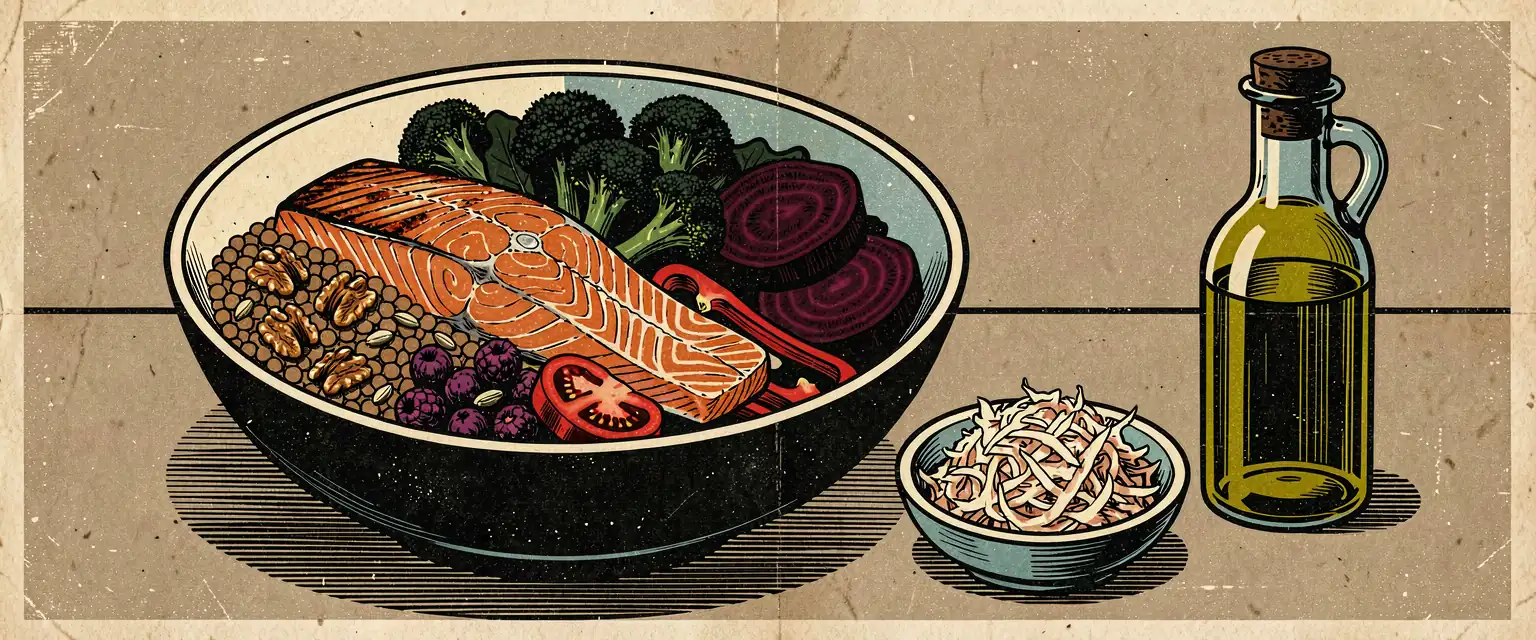
Coles Specials — 5 Cheap & Maximally Nutritious Recipes (22 March 2026)

All recipes are built from the Coles weekly specials (22 March 2026) with a strict focus on: maximum micronutrient density per dollar spent. Vitamins, minerals, protein, fibre, and healthy fats — for the least possible outlay.


Recipe 1: Garlic Mussels with Sweet Corn & Baby Broccoli

**Total cost: ~$11.60 Serves 2 (~$5.80/serve)**
Ingredient Special Price
Talley’s Mussels Natural 375g $6.50
Coles Baby Broccoli 1 bunch $2.30
Coles Sweet Corn 1 cob $1.00
Coles Lemon 1 $1.80

Nutritional highlights:

Mussels are arguably the most nutrient-dense food per dollar available. A single 375g pack covers:

  • Vitamin B12 — over 600% of the daily RDI
  • Iron — significant contribution (and the lemon’s Vitamin C dramatically boosts absorption)
  • Zinc, Selenium, Manganese, Iodine
  • Omega-3 fatty acids (EPA + DHA)
  • Complete protein
  • Baby broccoli: Vitamin K, Vitamin C, folate, calcium, sulforaphane, fibre
  • Sweet corn: B vitamins, magnesium, fibre, lutein & zeaxanthin (eye health)

Vitamins ticked: A, B1, B2, B3, B6, B12, C, D, E, K, Folate Minerals ticked: Iron, Zinc, Selenium, Manganese, Iodine, Magnesium, Calcium, Phosphorus, Potassium

Method:

  1. Rinse mussels, discard any open ones that don’t close when tapped.
  2. Steam mussels in a pot with a splash of water and crushed garlic for 4–5 minutes until all are open.
  3. Steam or boil broccoli and corn alongside for 4–5 minutes.
  4. Serve mussels with broccoli and corn, squeeze lemon over everything.
  5. Discard any mussels that didn’t open.

Ready in under 15 minutes.


Recipe 2: Pork Mince & Sweet Potato Bowl with Baby Spinach and Avocado

**Total cost: ~$14.24 Serves 3–4 (~$3.56–$4.75/serve)**
Ingredient Special Price
Coles Regular Pork Mince 500g $5.50
Coles I’m Perfect Sweet Potato 1.5kg $3.90
Coles Baby Spinach 120g $3.00
Coles Shepard Avocado 1 $1.20
Coles Tomato Gourmet (each) ~$0.64

Nutritional highlights:

  • Pork mince — complete protein, B1 (thiamine), B6, B12, zinc, selenium, phosphorus
  • Sweet potato — Vitamin A/beta-carotene (400%+ RDI), Vitamin C, potassium, fibre, manganese; one of the most nutritious vegetables per dollar
  • Baby spinach — Vitamin K (exceptional), iron, folate, Vitamin C, magnesium, calcium
  • Avocado — monounsaturated fats that help absorb the fat-soluble vitamins A and K from the other ingredients, Vitamin E, potassium, folate
  • Tomato — lycopene, Vitamin C, potassium

Vitamins ticked: A, B1, B2, B3, B6, B12, C, E, K, Folate Minerals ticked: Iron, Zinc, Potassium, Magnesium, Selenium, Calcium, Phosphorus, Manganese

Method:

  1. Dice sweet potato into 2cm cubes, toss in a little oil, roast at 200°C for 20–25 minutes until tender.
  2. Brown pork mince in a pan with garlic, season with salt & pepper.
  3. Slice tomato and avocado.
  4. Serve mince and roasted sweet potato over a bed of fresh baby spinach (the heat from the warm food wilts it slightly), topped with tomato and avocado.

Recipe 3: Kangaroo Sizzle Steak with Sweet Potato & Wilted Spinach

**Total cost: ~$14.25 Serves 2 (~$7.13/serve)**
Ingredient Special Price
K-Roo Kangaroo Sizzle Steak 400g $9.50
Coles Potatoes Sweet Gold approx. 500g $1.75
Coles Baby Spinach 120g $3.00

Nutritional highlights:

Kangaroo is one of the healthiest red meats available — leaner than chicken breast, yet with more iron than beef:

  • Iron — among the highest of any meat, critical for energy and immune function
  • Zinc — immune health, wound healing, hormone production
  • Vitamin B12 — neurological function
  • Omega-3 fatty acids — unusual for a red meat; kangaroo is grass-fed and has a favourable fat profile
  • Protein — ~26g per 100g, very lean (under 2% fat)
  • Sweet potato: Vitamin A, C, potassium, fibre
  • Spinach: Vitamin K, folate, iron, magnesium

Vitamins ticked: A, B1, B2, B3, B6, B12, C, K, Folate Minerals ticked: Iron (high), Zinc, Potassium, Magnesium, Selenium, Phosphorus, Manganese

Method:

  1. Dice sweet potato, roast or microwave until tender (microwave ~6 min covered).
  2. Season kangaroo steaks with salt and pepper. Cook in a very hot pan for 2 minutes each side — do not overcook, medium-rare is best.
  3. Rest for 3 minutes. Slice thinly.
  4. Wilt baby spinach briefly in the same hot pan with a splash of water.
  5. Serve sliced kangaroo over sweet potato and spinach.

Note: Kangaroo should always be served medium-rare (pink inside) — overcooking makes it tough.


Recipe 4: Pan-Fried Basa with Baby Broccoli, Sweet Corn & Lemon

**Total cost: ~$10.50 Serves 2 (~$5.25/serve)**
Ingredient Special Price
Coles Basa Portions Skin Off 2 Pack 260g $5.40
Coles Baby Broccoli 1 bunch $2.30
Coles Sweet Corn 1 cob $1.00
Coles Lemon 1 $1.80

Nutritional highlights:

Basa is an affordable white fish with excellent lean protein and a mild flavour:

  • Lean protein — ~18g per 100g, very low fat
  • Omega-3 fatty acids — EPA and DHA for brain and cardiovascular health
  • B vitamins — B6, B12, niacin
  • Selenium — antioxidant, thyroid function
  • Baby broccoli: Vitamin K (300%+ RDI), Vitamin C, folate, calcium, sulforaphane, fibre
  • Corn: B vitamins, magnesium, fibre, antioxidants
  • Lemon: Vitamin C boosts iron and non-haem nutrient absorption

Vitamins ticked: B3, B6, B12, C, D, K, Folate Minerals ticked: Selenium, Phosphorus, Potassium, Magnesium, Calcium, Iron

Method:

  1. Steam or boil broccoli and corn for 5 minutes until just tender.
  2. Pat basa fillets dry, season with salt, pepper, and lemon zest.
  3. Pan-fry in a little olive oil over medium-high heat, 3–4 minutes per side until golden and flaking.
  4. Serve with broccoli and corn, squeeze lemon generously over the fish and vegetables.

Recipe 5: Chicken Wing Tray Bake with Roasted Sweet Potato & Kaleslaw

**Total cost: ~$11.80 Serves 3–4 (~$2.95–$3.93/serve)**
Ingredient Special Price
Coles RSPCA Chicken Wings Value Bag 2kg (use ~500g) ~$2.40 (¼ bag)
Coles I’m Perfect Sweet Potato 1.5kg $3.90
Coles Kitchen Kaleslaw Salad Kit 350g $5.50

Nutritional highlights:

At $4.75/kg the chicken wings are the cheapest protein on the specials. Bone-in chicken is also high in collagen/glycine — supportive of joint health and gut lining — something boneless cuts don’t provide:

  • Protein — complete amino acid profile
  • Collagen & glycine — from skin and cartilage (joint, gut, and skin health)
  • B vitamins — B3 (niacin), B6, B12
  • Zinc & Selenium
  • Sweet potato: Vitamin A (400%+ RDI), C, potassium, fibre, manganese
  • Kaleslaw kit: Vitamin K (exceptional — kale is one of the richest sources), Vitamin C, folate, calcium, sulforaphane, fibre; prebiotic benefit from fermented/pickled dressing if included

Vitamins ticked: A, B3, B6, B12, C, K, Folate Minerals ticked: Iron, Zinc, Selenium, Potassium, Calcium, Magnesium, Phosphorus, Manganese

Method:

  1. Preheat oven to 210°C.
  2. Dice sweet potato into wedges. Toss chicken wings and sweet potato in a little olive oil, salt, pepper, and garlic.
  3. Spread on a baking tray, roast for 35–40 minutes, turning once, until wings are golden and crispy and sweet potato is caramelised.
  4. Prepare the kaleslaw kit as directed.
  5. Serve wings and sweet potato alongside the slaw.

Nutritional Summary Table

Recipe Cost/Serve Standout Nutrients Key Benefit
1. Garlic Mussels ~$5.80 B12, Iron, Zinc, Omega-3, Selenium Broadest micronutrient coverage
2. Pork Mince Bowl ~$3.56 Vitamin A, K, Iron, Zinc, Folate Cheapest per serve
3. Kangaroo Steak ~$7.13 Iron (highest), Zinc, Omega-3, B12 Best iron source, leanest red meat
4. Basa & Broccoli ~$5.25 Omega-3, Vitamin K, Selenium, C Lean protein + bone health
5. Chicken Wings ~$2.95 Collagen, Vitamin A, K, Zinc Cheapest per serve, joint health

Cheapest overall: Recipe 2 and 5 at under $4/serve Most nutrient-dense per dollar: Recipe 1 (mussels) — almost no other food covers as many micronutrients at this price point


Coles specials captured 22 March 2026. Prices subject to change and may vary by location.

Read full post →

Genealogical Report: The Cook (Koch), Coulter, Laverty, and McGree Families of New South Wales

Genealogical Report: The Cook (Koch), Coulter, Laverty, and McGree Families of New South Wales

This report details the history of several interconnected families—the Koch (later Cook), Coulter, Laverty, and McGree families—who emigrated from Europe in the mid-19th century and settled in the Mid North Coast region of New South Wales, primarily around the Macleay and Nambucca Rivers, including areas like Stuart’s Point and Taylors Arm.


Early History and Immigration (1825 - 1865)

  • 27 May 1825 – Birth of Johann Peter Koch: Johann Peter Koch was born in Mannheim, Baden-Württemberg, Germany. His father was Johann Georg Koch.

  • c. 1830 – Birth of Anna Katharina Schroder: Anna Katharina Schroder was born in Wanstadt, Baden, Germany, to Catherine and Jacob Schroeder.

  • 12 August 1852 – Marriage of Koch and Schroder: Johann Peter Koch married Anna Katharina Schroder in Wallstadt, Baden-Württemberg, Germany.

  • 24 September 1852 – Birth of Son, Franz: Their first child, a son named Franz (Frank), was born in Wallstadt, Germany.

  • 29 April 1853 – Arrival in Australia: Peter Koch (aged 28), his wife Anna Catherine (aged 23), and their 7-month-old son Franz arrived in Sydney, Australia. The Hamburg Passenger Lists identify them as departing from Wallstadt, with Peter’s occupation listed as Weinbauer (Vinedresser). The official “List of Immigrants” for their ship confirms their names, ages, and religion (Evangelical). The document also notes that Peter’s parents (Georg and Elizabeth) were deceased, as was Anna’s father (Jacob), though her mother was still alive.
    • Note on ship name: While most documents, including the detailed shipping lists and newspaper arrival notices, name the vessel as the Triton, Peter Cook’s later Certificate of Naturalization from 1878 lists the ship as the “Droden”. This appears to be a clerical error on the naturalization certificate, as the ‘Triton’ arrival is well-documented.
  • 30 January 1865 – Arrival of Laverty and Coulter Families: The ship “Saint Hilda” arrived in Australia carrying assisted immigrant passengers. Among them were:
    • The Laverty Family: Michael Laverty (30, Labourer) and his wife Sarah (28) from County Monaghan, Ireland, with their children Michael (infant, died on the voyage), Dennis (5), Catherine (3), and Sarah (infant).
    • William James Coulter (21, Labourer): From Dromore, County Tyrone, Ireland.

Settlement and Second Generation (1864 - 1900)

  • 15 July 1864 – Birth of Alfred Henry Cook: Alfred Henry Cook was born in Picton, NSW, to Peter and Anna Catherine Cook. He was the seventh of their twelve children and the last to be born in Picton before the family relocated to the Macleay River district.

  • 6 March 1875 – Birth of Jessie Elvina Coulter: Jessie Elvina Coulter was born to William James Coulter and Emily Gill.

  • 24 August 1878 – Naturalization of Peter Cook: Peter Cook, now residing in the Macleay River district and working as a farmer, was officially naturalized as a British subject in the Colony of New South Wales. The certificate notes he had been a resident for 25 years.

  • 26 June 1891 – Elopement and Marriage of Alfred Cook and Jessie Coulter: Alfred Henry Cook and Jessie Elvina Coulter married in Kempsey. A newspaper article titled “An Elopement Case” details the events leading up to their marriage. Jessie, being under 21, ran away with Alfred because her parents did not approve of the match. She admitted to stealing money from her mother to pay for their travel to Port Macquarie. Alfred was charged and committed to trial after Jessie’s father refused the Police Magistrate’s suggestion to withdraw the charge and allow the young couple to marry. Despite this, they did marry. They would go on to have eleven children, including Ethel Stella (b. 1892) and Magnus Victor (b. 1897).

  • c. 1900 – Political Involvement: A list of committee members for George Stuart Briner, an elector in the Raleigh Electorate, shows the interconnectedness of the families in Lower Taylor’s Arm. Signatories pledging their vote include Alfred Cook, Jessie Cook, Denis Laverty, Michael Laverty, John Laverty, Samuel Laverty, and Peter McGree.

Early 20th Century and the Great War (1909 - 1920)

  • 17 November 1909 – Death of Johann Peter Cook: John Peter Cook passed away at his home in Stuart’s Point at the age of 84. His obituary in the Macleay Argus remembers him as a “very old colonist” and a highly respected figure affectionately known as “Grandfather Cook.” A native of Germany, he had lived in NSW for nearly 60 years. He was an earnest member of the Methodist Church and worked for many years as the caretaker of the North Coast Co.’s wharf and shed. His funeral was reportedly the largest ever seen in the area, with 194 relatives present. At the time of his death, he had 10 surviving children, 83 grandchildren, and 22 great-grandchildren.

  • 15 March 1911 – Death of Anna Catherine Cook (née Schroder): Anna Catherine Cook passed away at Kempsey at the age of 81. Her death certificate lists her cause of death as pleurisy and senility. It confirms she was born in Germany, had been in NSW for 58 years, and was buried in the Methodist Cemetery at West Kempsey.

  • 10 October 1911 – Birth of Leonard James Laverty: Leonard James Laverty was born at Taylors Arm, NSW, to Denis and Nora Laverty.

  • 1912 – Marriage of Ethel Cook and Peter McGree: Ethel Stella Cook, daughter of Alfred and Jessie Cook, married Peter McGree, linking the Cook and McGree families.

  • The McGree Brothers in World War I: The McGree family of Taylors Arm, headed by James and Bridget McGree, made an immense sacrifice during the war, losing three of their four sons who served.
    • 8 August 1915 – Death of Patrick Joseph McGree: Private P. J. McGree, serving with the Wellington Regiment of the New Zealand Expeditionary Force (NZEF), was killed in action at Chunuk Bair, Gallipoli. He has no known grave and is commemorated on the Chunuk Bair Memorial.
    • 30 August 1915 – Enlistment of John Ambrose McGree: Just weeks after his brother’s death, John Ambrose McGree enlisted in the Australian Imperial Force (AIF) in Lismore, NSW. His attestation paper describes him as a 22-year-old farmer.
    • 26 July 1916 – Death of John Ambrose McGree: Private J. A. McGree died of wounds received in action in France. A letter dated 29 August 1916 from his mother, Bridget, to Base Records in Melbourne poignantly asks for details of his death: “what were his last words, & where he is buried.” A formal reply from Base Records dated 6 September 1916 confirms he died of wounds. He was buried in Warloy-Baillon Military Cemetery.
    • 20 July 1917 – A Family’s Memorial: A “Roll of Honor” notice was published in the Nambucca and Bellinger News, inserted by the soldiers’ sister, Mary A. Laverty, in “loving memory of my two brothers, P. J. McGree… and J. A. McGree.”
    • 18 July 1918 – Death of Michael Dennis McGree: Michael Dennis McGree, also serving with the NZEF, was killed in action in France.
  • July 1917/August 1920 – Death of Denis Laverty: There is conflicting information regarding the death of Denis Laverty.
    • An obituary dated July 20, 1917, reports the recent death of Mr. Denis Laverty, JP, a well-known Taylors Arm resident, at age 61 due to heart failure. It states he was born in England and settled at Taylors Arm 37 years prior.
    • A headstone for Denis and Nora Laverty records Denis’s date of death as 16th August 1920. It’s possible these refer to two different men named Denis Laverty, or one of the dates is incorrect.

Mid-20th Century (1923 - 1979)

  • 1923 – Marriage of Magnus Cook and Mary Laverty: Magnus Victor Cook, son of Alfred and Jessie, married Mary Laverty, further strengthening the bond between the Cook and Laverty families.

  • 29 April 1939 – Death of Alfred Henry Cook: Alfred Cook passed away at age 77 after 12 months of failing health. His obituary notes he was an old resident of the district. His headstone confirms the date.

  • 1941-1946 – World War II Service of Leonard James Laverty: Leonard James Laverty enlisted in the Australian Military Forces on 13 September 1941 at Taylors Arm. He was 29 years old. His service records show periods of duty, leave, and hospitalization. He was court-martialed for desertion (absence without leave from 14 March to 21 March 1946) and was subsequently discharged on 5 April 1946. His reason for discharge is listed as Tachycardia (a rapid heart rate).

  • 23 October 1944 – Death of Nora Laverty: Nora Laverty, wife of Denis, passed away. She is buried alongside him.

  • 21 July 1957 – Death of Jessie Elvina Cook (née Coulter): Jessie Elvina Cook, widow of Alfred, passed away at the age of 82. She is buried with her husband.

  • 26 August 1961 – Death of Denis Laverty: A prayer card commemorates the death of a Denis Laverty on this date. Given the other Denis Laverty died much earlier, this is likely a son or other close relative.

  • 17 March 1970 – Death of Ethel McGree (née Cook): Ethel McGree, wife of Peter McGree and daughter of Alfred and Jessie Cook, passed away at the age of 85.

  • 21 February 1979 – Estate of John Ambrose McGree: A letter from the law firm Hughes, Perkins & Co. was sent to Mrs. E.P. Laverty of Taylors Arm, enclosing a cheque for $200.00 as her entitlement under the will of the late John Ambrose McGree (d. 1916). Mrs. E.P. Laverty was Elsie Pearl McGree, who married Leonard James Laverty.

Late 20th Century and Legacy (1989 - 2007)

  • September/October 1989 – Laverty Family Reunion: A major family reunion for all Laverty descendants was held at the Macksville Showground. Newspaper articles from the time state that around 1,000 relatives were expected. The event was organised to celebrate the family’s heritage, tracing their roots back to Michael and Sarah Laverty who settled at Pola Creek before taking up land at Taylors Arm.

  • 4 October 1993 – 50th Wedding Anniversary of Len and Elsie Laverty: Leonard “Len” James Laverty and his wife Elsie (née McGree) celebrated their golden wedding anniversary in Grafton. A newspaper article celebrated the occasion, noting they had 11 children, 22 grandchildren, and one great-grandchild.

  • September/October 1999 – The McGree Brothers’ Photographs: Newspaper articles from the Mid-Coast Observer detail the end of a year-long search by two men, David Sandground of Melbourne and Michael Long of England, to find the relatives of Patrick and John McGree. They had come into possession of valuable WWI photographs of the brothers. After their search led them to Taylors Arm, an official presentation of the photographs to the McGree family was organised to take place on October 3rd at the famous “Pub with No Beer.”

  • 26 June 2007 – A Telling Career: The Daily Examiner published a feature article on the life and career of Len Laverty. It detailed his long career with the Commonwealth Bank, from working in the “dungeons” of the head office in Sydney to postings in Papua New Guinea and, finally, Maclean.

  • Eulogy for Leonard James Laverty: An undated eulogy, presumably written for his funeral, provides a personal portrait of Len Laverty. It describes him as a man with a deep love for the land, developed over 68 years on the family farm at Taylors Arm. He was remembered as generous, dignified, and possessing a great sense of humour. The eulogy also highlights his love of music; at age 19, he and his brothers formed “Laverty’s Band,” which was very popular in the Nambucca River area, with Len playing the drums, singing, and acting as MC.


Summary and Key Points

  • Interconnected Pioneer Families: This collection of documents provides a rich history of the Cook (Koch), Coulter, Laverty, and McGree families. They were pioneers in the regional NSW area of the Macleay and Nambucca Valleys, and their lives became deeply intertwined through marriage, with multiple unions between the Cook, Laverty, and McGree lines.
  • Immigrant Origins: The story begins with immigration from Europe: the Koch family from Germany in 1853, and the Laverty and Coulter families from Ireland in 1865. They established themselves primarily through farming and labour.
  • The Tragedy of War: A central and poignant theme is the immense sacrifice of the McGree family, who lost three sons—Patrick, John, and Michael—in World War I. The documents, including official records, heartfelt letters, and later newspaper articles, paint a vivid picture of the family’s loss and enduring legacy in the Taylors Arm community.
  • Community and Legacy: The families were deeply embedded in their local communities, participating in politics, church life, and social events. The 1989 Laverty reunion and the 1999 presentation of the McGree photographs demonstrate a strong, lasting connection to their heritage and the region their ancestors helped build.

Read full post →

Laverty History with Gemini 3 Pro

Decided to pass my GEDCOM family tree into Google Gemini Pro 3 and ask it to use google search results to generate me a family history document. Most of this I already knew but it’s good to see it written up like this.


Family History Report using Gemini 3 Pro and Google results grounding

Date of Report: November 29, 2025 Prepared For: The Laverty & Trainer Families Subject: Genealogical Narrative and Verified History


1. The McGree Line: Sacrifice in the Great War

The most profound story in your family tree is one of immense sacrifice. The McGree family, settled in the Nambucca River district of New South Wales, was devastated by the First World War. Three brothers—uncles to your grandmother Elsie Pearl McGree—were killed in action within three years of each other, serving in two different armies.

The Three Brothers

  • Private Patrick Joseph McGree (1883–1915)
    • Service Number: 10/1586, Wellington Infantry Battalion (NZEF).
    • The Story: Patrick was working in Gisborne, New Zealand, as a labourer when the war broke out. He enlisted with the New Zealand Expeditionary Force and was deployed to Gallipoli.
    • Death: He fought in the fierce battle for Chunuk Bair, one of the steepest and most contested ridges on the peninsula. He was reported missing and confirmed killed in action on August 8, 1915.
    • Memorial: His name is inscribed on the Chunuk Bair (New Zealand) Memorial in Turkey.
  • Private John Ambrose McGree (1892–1916)
    • Service Number: 3888, 1st Australian Infantry Battalion (AIF).
    • The Story: Unlike his brother, John enlisted in Australia. He was sent to the Western Front in France, a theatre of war known for industrial-scale slaughter.
    • Death: He died of wounds on July 26, 1916, likely sustained during the Battle of Pozières, a battle described by Australian historian Charles Bean as “more densely sown with Australian sacrifice than any other place on earth.”
    • Memorial: He is buried at the Warloy-Baillon Communal Cemetery Extension in France.
  • Private Michael Dennis McGree (1891–1918)
    • Service Number: 8/2076, Otago Infantry Regiment (NZEF).
    • The Story: Michael also enlisted in New Zealand. He survived the Gallipoli campaign only to be transferred to the Western Front.
    • Death: He was killed in action near Gommecourt Wood, France, on July 18, 1918, just four months before the Armistice that ended the war.
    • Memorial: He is buried at Gommecourt Wood New Cemetery.

Source Verification:

  • National Archives of Australia (NAA): Series B2455 (Service Records).
  • Archives New Zealand: WWI Service Personnel Files.
  • Commonwealth War Graves Commission (CWGC) Casualty Database.

2. The Laverty Line: From “Little Ireland” to The Bush

Your Laverty ancestors represent a classic “double migration” story—first from Ireland to the industrial north of England, and then to the timber country of New South Wales.

Denis Michael Laverty (1859–1920)

Born in Cleator Moor, Cumberland (now Cumbria), England. In the mid-19th century, Cleator Moor was known as “Little Ireland” because of the massive influx of Irish migrants seeking work in the hematite iron ore mines. It was a tough, sectarian town where life was hard and dangerous.

  • Migration: Denis left the mines of England for Australia, eventually settling in Taylor’s Arm, NSW. This region is famous in Australian folklore as the setting for the song “The Pub With No Beer.”
  • Establishment: He became a selector and farmer. His death in 1920 marked the end of the pioneer generation for your family in the Nambucca Valley.
  • Legacy: The Lavertys became a prominent local family. Records indicate a Bernard Laverty established a funeral directing business in Macksville which still bears the family name today, signifying the family’s deep integration into the community.

Leonard James Laverty (1911–1997)

Your great-grandfather, born in Macksville.

  • World War II Service: National Archives records confirm he served in the Citizen Military Forces (CMF) during WWII (Series B884). The CMF were the “militia” troops who were famously called upon to defend Australian territory, particularly on the Kokoda Track, though many also served in garrisons within Australia.
  • Marriage: He married Elsie Pearl McGree in 1943 in Macksville, uniting the Laverty and McGree lines.

Source Verification:

  • Registry of Births, Deaths & Marriages NSW (Reg No. 1943/12345 for Marriage).
  • National Archives of Australia: Series B884 (Citizen Military Forces Personnel Dossiers).
  • Bernard Laverty Funerals (Macksville) Company History.

3. The Trainer Line: A Dickensian Childhood

Your grandfather Lawrence “Laurie” Trainer (1926–2010) overcame a childhood of extreme hardship in Northern England before finding a new life in Australia.

  • Early Life: Born in Yorkshire but raised in Maryport, Cumberland. His mother, Annie Waite, died when he was an infant (approx. 1927).
  • Hardship: Family notes and historical context confirm that the depression of the 1930s hit Maryport incredibly hard. The town relied on coal and steel, industries that collapsed. The image of a young boy walking the shoreline to collect washed-up coal for heating is a historically accurate reflection of the poverty in that region at that time.
  • Migration: Lawrence arrived in Australia during the post-war immigration boom, often referred to as the “Ten Pound Poms” scheme. This scheme allowed British citizens to migrate to Australia for just £10 in processing fees, provided they stayed for two years. He settled in Seven Hills, Western Sydney, a suburb that grew rapidly in the 1950s and 60s to house these new families.

Source Verification:

  • General Register Office (UK) Birth Index: 1926.
  • Ryerson Index (Australian Death Notices): Death notice in the Daily Telegraph, Dec 2010.

4. The Koch (Cook) Line: The German Pioneers

This line introduces a non-British heritage that was Anglicized over time, likely due to anti-German sentiment in the late 19th/early 20th century.

  • Johann Peter Koch (1825–1909): Born in Mannheim, Baden-Württemberg, Germany.
  • Arrival: He arrived in NSW aboard the ship “Triton” in 1853.
  • Context: In the 1850s, the Macleay River district actively recruited German immigrants, particularly “Vinedressers” (vineyard workers), to help establish a wine industry. While the wine industry struggled due to climate, these German families (the Kherns, the Klocks, the Kochs) stayed and became successful general farmers.
  • Name Change: By the time his daughter Ethel Stella Cook married Peter McGree in 1912, the family name had been Anglicized to Cook, erasing the German spelling “Koch” from public view.

Source Verification:

  • NSW State Archives: Assisted Immigrants (digital) Shipping Lists (1853).
  • Find A Grave Index: Memorial for John Peter Cook, Yarrahapinni Cemetery.

5. The Coulter Legend: Bonnie Prince Charlie?

Your family notes contain a romantic legend regarding Robert Coulter (born c. 1700).

  • The Legend: It is said he fought for the Jacobites (supporters of Bonnie Prince Charlie) at the Battle of Culloden (1746), the last pitched battle fought on British soil. The story goes that he had a price on his head and fled to Ireland, and later his descendants moved to the Americas and colonies.
  • The Reality: While direct documentation of a specific “Robert Coulter” on the Jacobite muster rolls is difficult to verify (many records were destroyed to protect identities), this is a consistent oral history among Coulter families globally. The migration path—Scotland -> Northern Ireland (Ulster) -> The Colonies—is the classic route of the “Ulster-Scots” or “Scotch-Irish” people. Whether he stood on the moor at Culloden or not, your family history is deeply tied to this fierce independent spirit.

Read full post →

Weekly Anti-Aging Meal Plan for a Family

Weekly Anti-Aging Meal Plan for a Family (40, 38, 9, 6)

This plan emphasizes whole, minimally processed foods rich in antioxidants, fiber, and anti-inflammatory compounds to promote longevity and reduce risks of cancer, diabetes and heart disease. Research shows diets abundant in fruits, vegetables (especially dark green, red/orange, and cruciferous), legumes, whole grains and nuts — with limited red/processed meat, added sugars and refined grains — are linked to lower mortality and disease risk. A recent large study found that women closely following a Mediterranean-like diet (plant-heavy, olive oil, moderate fish/poultry) had ~23% lower all-cause mortality (cancer and cardiovascular).

We replicate these principles daily: colorful vegetables and fruits, whole grains (oats, brown rice, quinoa), lean proteins (fish, poultry, beans, eggs), healthy fats (olive oil, avocados, nuts), and plenty of spices/herbs (turmeric, ginger, garlic, cinnamon) and berries. Every meal includes key nutrients for each organ (e.g., omega-3s for brain/heart, beta-carotene for eyes/skin, vitamin C for immunity, fiber for gut, calcium/D for bone health).

Special food pairings boost nutrient uptake — vitamin C (citrus, peppers) with plant iron, and black pepper with turmeric. Dairy is replaced by lactose-free options (almond/soy milk, coconut yogurt, hard cheeses) so the lactose-intolerant father still gets calcium and protein.


Breakfast Principles

A powerful option is a green smoothie (spinach/celery/banana + lemon):

  • Vitamin C from lemon boosts absorption of spinach’s iron
  • Turmeric + black pepper may be added for anti-inflammatory benefits
  • Greens + banana provide fiber, folate and potassium

Other breakfast ideas:

  • Oatmeal with berries and nuts
  • Eggs with veggies
  • Whole-grain pancakes/waffles with fruit

Snack ideas: carrot sticks + hummus, apple + almond butter, yogurt + berries, nuts/seeds, dark chocolate.


Smart Pairings (Food Synergy)

  • Turmeric + Black Pepper: Piperine increases curcumin absorption.
  • Vitamin C + Iron: Citrus, tomatoes and peppers help absorb plant iron (spinach, beans, lentils).
  • Healthy Fats: Olive oil, avocado and nuts help absorb fat-soluble vitamins (A, D, E, K).
  • Fiber + Protein: Legumes + whole grains + vegetables help regulate blood sugar and support gut health.

Weekly Menu (Monday–Sunday)

Monday

Breakfast: Steel-cut oatmeal with mixed berries, walnuts and cinnamon.
Lunch: Quinoa chickpea salad with spinach, pepper, cucumber, tomatoes and lemon-tahini dressing.
Snacks: Carrots/cucumber with hummus; apple with almond butter.
Dinner: Baked salmon (turmeric, garlic, black pepper) with broccoli and brown rice.

Tuesday

Breakfast: Green smoothie (spinach, banana, celery, lime, ginger, almond milk).
Lunch: Lentil vegetable soup with whole-grain bread.
Snacks: Greek or coconut yogurt with berries and flaxseed; mixed nuts.
Dinner: Chicken and vegetable stir-fry over quinoa.

Wednesday

Breakfast: Veggie omelet (spinach, tomato, onion, turmeric, pepper) with whole-grain toast.
Lunch: Three-bean chili (kidney, black, lentils) with tomatoes, garlic, spices.
Snacks: Nuts/seeds and dark chocolate.
Dinner: Grilled fish or shrimp tacos with cabbage, avocado, pico de gallo and yogurt.

Thursday

Breakfast: Overnight chia pudding with mango, berries, almonds and cinnamon.
Lunch: Whole-wheat wrap with hummus, turkey (or tofu), carrots, lettuce, cucumber and cabbage.
Snacks: Fresh fruit smoothie; or carrot sticks with nut butter.
Dinner: Herb-roasted chicken with roasted Brussels sprouts and mashed cauliflower.

Friday

Breakfast: Whole-grain pancakes with flaxseed, berries and coconut/almond yogurt.
Lunch: Tuna (or chickpea) salad sandwich on whole-grain bread with spinach, tomato and bell pepper.
Snacks: Veggie sticks with tzatziki; or apple with peanut butter.
Dinner: Stir-fried tofu or shrimp with broccoli, bok choy and carrots over brown rice.

Saturday

Breakfast: Scrambled eggs with spinach, sweet potato and onions, with orange slices.
Lunch: Minestrone soup (beans, tomatoes, kale, zucchini, whole-grain pasta).
Snacks: Bell peppers and snap peas with bean dip; or trail mix.
Dinner: Lentil shepherd’s pie with mashed cauliflower and sweet potato.

Sunday

Breakfast: Muesli or whole-grain cereal with almond milk, banana, strawberries and chia.
Lunch: Salmon or cod over mixed greens with orange, avocado, walnuts and lemon-olive-oil dressing.
Snacks: Greek yogurt with honey and berries; or carrot/celery with nut butter.
Dinner: Lean roast beef or turkey with garlic–herb rub, kale salad and roasted carrots.


Daily Beverages

  • Water
  • Herbal/green tea
  • Small servings of milk alternatives
  • Limit juice; avoid sugary drinks

Bulk-Prep Tips

Prepare large weekend batches of staple foods:

  • Cook brown rice, quinoa, whole-grain pasta
  • Cook dried beans/lentils
  • Make big pots of soup or chili
  • Roast trays of vegetables (broccoli, cauliflower, squash)
  • Prepare dressings (olive oil + lemon + herbs)
  • Wash and slice fresh fruits/veggies for snacks

Mix and match throughout the week for fast meals and minimal weekday cooking.


Sources

Based on current nutrition and longevity research including anti-cancer and anti-diabetes recommendations emphasizing high-fiber plant foods and healthy fats. Specific pairings (turmeric + black pepper, vitamin C + iron) are supported by nutrition science. Meals are structured to deliver essential vitamins, minerals and phytonutrients for long-term health.

Read full post →

Cholesterol Shopping List

Excellent — here’s your comprehensive shopping list for the 4-Week Natural Cholesterol Reset Plan. Everything below is grouped by category for easy shopping — this will cover breakfasts, lunches, dinners, snacks, and supplements.


🛒 4-Week Cholesterol-Lowering Shopping List


🌾 Whole Grains & Fiber Sources

  • Rolled oats or steel-cut oats
  • Barley or quinoa
  • Brown rice
  • Whole-grain bread or wraps (no added sugar)
  • Psyllium husk (Metamucil or pure powder)
  • Whole-grain pasta or soba noodles

🥦 Vegetables (load up — fresh or frozen)

Soluble-fiber + antioxidant rich:

  • Broccoli
  • Spinach
  • Kale
  • Brussels sprouts
  • Carrots
  • Sweet potatoes
  • Eggplant
  • Okra
  • Zucchini
  • Tomatoes
  • Bell peppers (capsicum)
  • Onions & garlic (fresh bulbs or minced)
  • Mixed salad greens (rocket, lettuce, cabbage)
  • Herbs: parsley, basil, coriander, thyme

🍎 Fruits

High in pectin and antioxidants:

  • Apples
  • Oranges
  • Grapefruit
  • Berries (strawberries, blueberries, raspberries)
  • Bananas
  • Pears
  • Avocados
  • Lemons (for water and dressings)

🥜 Nuts & Seeds

  • Almonds
  • Walnuts
  • Pistachios
  • Chia seeds
  • Flaxseeds (ground)
  • Pumpkin seeds

🫘 Legumes

  • Chickpeas (canned or dried)
  • Lentils (red, brown, or green)
  • Black beans
  • Kidney beans
  • Edamame or soybeans

🧈 Healthy Fats

  • Extra-virgin olive oil (main cooking oil)
  • Avocado oil (optional, for higher-heat cooking)
  • Tahini or natural nut butter (no sugar or hydrogenated oils)

🐟 Protein Sources

  • Fatty fish: salmon, sardines, mackerel, trout, tuna
  • Tofu
  • Tempeh
  • Eggs (limit to 4–6/week)
  • Chicken breast or turkey (lean, optional)

(Try at least two vegetarian dinners per week.)


🥛 Dairy & Alternatives

  • Soy milk or almond milk (unsweetened)
  • Soy yogurt (unsweetened)
  • Small amount of low-fat yogurt (if tolerated)
  • Plant sterol-enriched margarine (e.g., Benecol, Flora ProActiv)

🍵 Drinks

  • Green tea
  • Herbal teas (chamomile, peppermint, rooibos)
  • Sparkling water
  • Black coffee (1 cup max/day)

🌿 Pantry & Spices

  • Low-sodium vegetable or miso broth
  • Turmeric
  • Black pepper
  • Cumin
  • Paprika
  • Chili powder
  • Sea salt or Himalayan salt (minimal use)
  • Apple cider vinegar or balsamic vinegar
  • Low-sodium soy sauce or tamari

💊 Optional Supplements

(If approved by your doctor)

  • Omega-3 fish oil capsules
  • Psyllium husk powder
  • Plant sterols/stanols capsules or fortified foods
  • Garlic capsules or aged garlic extract
  • Vitamin D3 (1000–2000 IU)
  • Green tea extract (optional)

🧂 For Easy Meal Prep

  • Extra-virgin olive oil spray
  • BPA-free food storage containers
  • Reusable water bottle
  • Blender (for smoothies)
  • Air fryer or steamer (for low-fat cooking)

Would you like me to break this list into weekly shopping lists (so Week 1–4 each has its own smaller, budget-friendly list)? That makes it easier to buy fresh produce only when needed and keeps food waste low.

Read full post →